



How to choose a family tent for New Zealand conditions

Family Tent Guide · New Zealand
A comprehensive guide to choosing the right family tent, comparing capacity, weather resistance, frame styles, and setup ease.
By Geoff Rawlings, founder of EquipOutdoors | Last updated: September 2026 | 8 min read
Start with the beds you need to fit, not just the number on the tent bag. Then compare weather protection, pitching effort and how much room is left in the boot. The six tents below range from compact weekend options to larger setups for longer stays.
Start with realistic capacity, including people and gear
A tent’s advertised berth is its maximum sleeping capacity, not a promise of space for beds, bags and a rainy afternoon indoors. Treat it as a starting point, then check the floor plan and any recommended comfort rating.
Subtracting two or three from the advertised capacity can help you shortlist tents, but it is only a rule of thumb. An eight-person tent might suit five people with gear, depending on the layout. Camp stretchers, queen-sized airbeds and portacots can change what fits.
Always check the physical floor plan dimensions and factor in your sleeping arrangements, clothing bags, and the space needed for kids to move around comfortably on rainy days and for teenagers who want their own space.
Weather protection for New Zealand wind and rain
New Zealand camping weather can change quickly, even in mid-summer. A sheltered holiday park and an exposed coastal site place different demands on a tent. Check the manufacturer’s guidance for your model rather than assuming any family tent will suit every condition.
Look at four things:
The fly. Check the waterhead rating, sealed seams and the manufacturer’s fabric-care guidance. Denier describes yarn thickness, not a guarantee of weather resistance or durability.
The floor. A bucket or tub floor turns up at the edges to help keep ground-level moisture out. Check the floor material and condition, and choose a well-drained pitch rather than relying on the floor to keep standing water out.
The frame. Pole tents use rigid supports; air tents use inflated beams that can flex under load. Neither frame type makes a tent storm-proof. Design, condition and correct pitching all matter.
Your pitch. Follow the manufacturer’s instructions for pegging, guy ropes and orientation. Choose a sheltered spot where possible and check the forecast before setting up.
Waterhead ratings explained in plain language
A waterhead rating, measured in millimetres, describes the water pressure a fabric can withstand before it leaks. It helps you compare waterproof coatings, but does not measure wind resistance or the performance of the whole tent.
The polyester fly ratings in our comparison range from 1,500mm to 8,000mm. A higher rating means the fabric withstands more water pressure in testing, not that the tent is automatically better for an exposed campsite. Compare sealed seams, floor construction and the manufacturer’s intended use alongside the number.
Canvas and polycotton tents may describe weather protection differently. Check the fabric treatment and care instructions, including whether the tent needs seasoning by wetting and drying before its first trip.
Pole tents versus air tents
Compare how each tent goes up as well as how it packs away. The frame type is only part of the story.
Pole tents use fibreglass, aluminium or steel supports. Some need poles threaded through sleeves; quick-pitch models have a pre-attached frame. Price, packed size, weight and the number of people needed to pitch vary by model. Check spare-pole availability before buying.
Air tents use inflatable beams for their main support, although some also have poles for awnings or extra stability. Depending on the model, you inflate them with a hand pump, a compatible electric pump or a built-in system. Follow the specified inflation pressure and pitching sequence.
Air tents are not always heavier or bulkier: the Aerospeed 6 is the lightest tent in this comparison. Compare the actual packed dimensions and weight rather than assuming one frame type will suit your car. Check what repair kit, replacement valves and backup pump options are available for an air tent, just as you would check spare poles for a pole tent.
Setup time and ease
Pitching effort matters when you arrive late or the kids are already asking to go exploring. Check whether the tent can be managed by one adult or needs a second pair of hands.
Quoted frame-opening or inflation times are not full setup times. Allow extra time to lay out the tent, fit any separate fly or poles, peg it down and tension the guy ropes. A large multi-room tent has more to set up than a compact one, even with a quick-pitch frame. Your first attempt will usually take longer.
Whatever tent you buy, make sure to pitch it on the lawn before the first trip to save yourself the headache of trying to figure out what pole goes where at the campsite.
Living space, bedrooms and ventilation
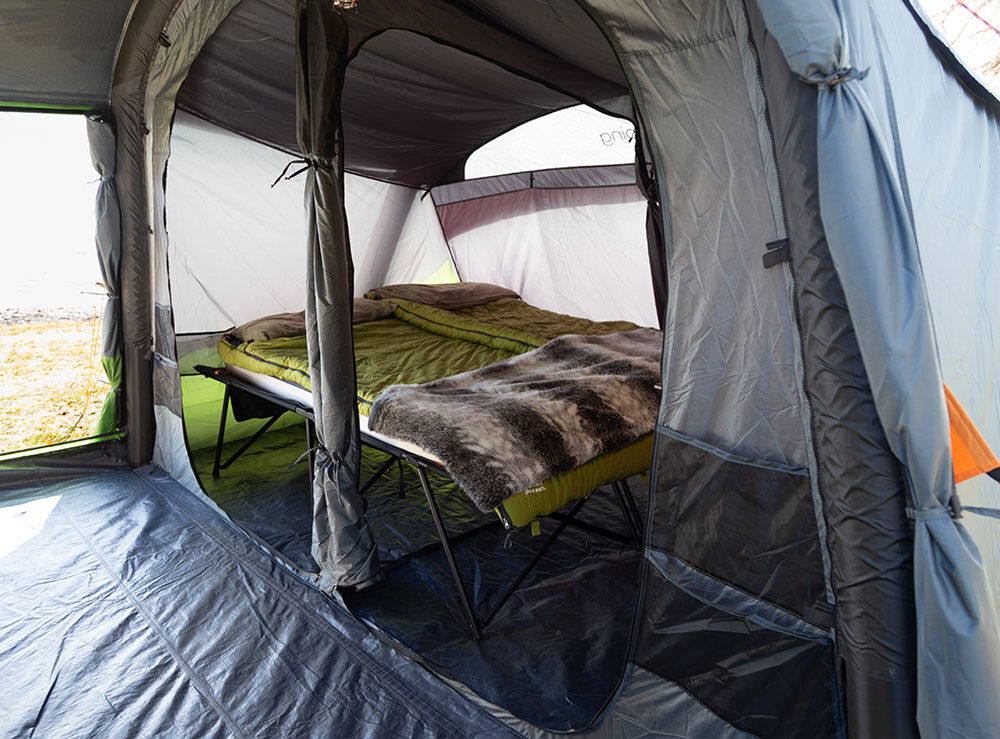
Separate bedrooms give parents and children some privacy, while a living area keeps bags and wet-weather activities out of the sleeping space. Check whether room dividers and bedroom pods are included, and how much living space remains when every bedroom is in use. Darkened or blackout bedrooms can be useful for naps and lighter summer evenings.
Ventilation helps reduce condensation, but cannot guarantee a dry inner tent in every condition. Look for mesh doors, windows and vents that allow airflow while keeping insects out. Follow the manufacturer’s ventilation guidance, keep vents clear and air the tent during the day when conditions allow.
Packed size, weight and vehicle space
Family tents are substantial investments in both money and storage space. Measure your vehicle’s boot and the space you actually have with the rest of the kit in it: chairs, a chilly bin, sleeping bags, mats, a stove and everyone’s bags.
Family-tent comparison
Compare the six options below using EquipOutdoors’ listed specifications. Unless identified as a manufacturer comfort rating or an EquipOutdoors recommendation, suggested capacity with gear is an estimate. Check your mattresses and bags against the floor plan.
Short setup times refer to frame opening or inflation, not a fully pitched, pegged and guyed tent.
| Product | Best suited to | Realistic sleeping capacity with gear | Weather / waterhead (manufacturer) | Setup style | Packed size and weight | Main strength | Main trade-off |
|---|---|---|---|---|---|---|---|
| Coleman Instant Up Silver 6P Darkroom | First family tent, holiday parks, weekends | 4 with gear (rated up to 6) | 1,500mm fly, seam sealed, HD PE floor | Instant up hybrid steel frame, under 2 minutes | 136 x 27 x 27cm, 15.8kg | Fastest way into a darkened family tent | Lowest waterhead here, single room, no separate living area |
| Outdoor Connection Brampton 3 Room Dome Tent | Larger families wanting separate rooms | 8 plus living space (EquipOutdoors recommendation; rated up to 12) | 3,000mm minimum fly rating, UV-PROTEK treatment, 175gsm PE floor | Hornet pole system with near-vertical walls | 82 x 54 x 36cm, 32.1kg | Three separated rooms for sleeping and living, with walk-around headroom | Bulky and heavy to transport; needs a large campsite pitch |
| OZtrail Fast Frame BlockOut Lumos 6P | Families who want quick pitch plus a dark, cool tent | 4 with gear (rated 6) | 3,000mm 150D ripstop fly with BlockOut coating, PVC polyoxford floor | Fast Frame, pitched in minutes | 115 x 22 x 24cm, 20kg | BlockOut fly blocks up to 95% light and reduces internal heat by up to 10 degrees, integrated 300 lumen light | 20kg to transport; one sleeping room |
| Zempire Aerospeed 6 | Air tent buyers who still want a small pack size | 4 with gear (comfort rated 6 in a single sleeping area) | 3,000mm fly, 5,000mm floor, three season, UPF50+ | Inflatable air frame in under 2 minutes, with aluminium brow poles | 59 x 29 x 30cm, 10.8kg | Lightest and smallest packed air tent here at 10.8kg | One sleeping area, 8.96m² internal floor |
| Outdoor Connection Galaxy 3 Room Family Dome | Large families and groups sharing one tent | 10 plus living space (rated up to 15) | 3,000mm minimum (measured at 4,500mm), 150gsm PE floor, UV-PROTEK fly | Steel uprights with fibreglass overtop poles | Two bags: 84 x 40 x 40cm and 79 x 16 x 18cm, 43.9kg total | Three rooms at 305 x 240cm each with walk-around headroom | Heavy, and a long pitch for the size |
| Kiwi Camping Tui 6 Air | Extended trips and basecamp families who pitch once and stay | 4 to 5 (manufacturer comfort rating; sleeps up to 6) | 8,000mm double coated 150D fly, 180gsm PE bucket floor, UPF50+ | Auto-inflate air frame with dual lithium-ion batteries and manual backup pump | 1,100 x 545 x 550mm, 48.15kg | Highest waterhead here, 24.42m² floor area and a 5.55m² sunroom | Heaviest and largest packed size, needs the boot space |
Frequently asked questions
Is a 3,000mm waterhead enough for New Zealand?
A 3,000mm fly can be suitable for family camping, but the rating alone cannot tell you whether a tent suits your trip. Check its seams, floor, condition and intended use, along with the forecast and how exposed your campsite is.
Are air tents better in wind than pole tents?
Not automatically. Air beams can flex under load, but wind performance also depends on the tent’s shape, construction and correct pitching. Follow the manufacturer’s guidance and avoid treating either frame type as a guarantee in severe weather.
What size tent do I need for a family of four?
A six-person tent is a useful starting point, not a guarantee. Check whether your beds fit inside the bedrooms with room for bags and access. Larger airbeds, stretchers or a portacot may mean choosing a bigger tent.
How long does a family tent take to put up?
It depends on the model, conditions and your experience. An “under two minutes” claim may cover only opening or inflating the frame. Allow extra time for the fly, separate poles, pegs, guy ropes and awnings. Practise the complete pitch at home before your first trip.
Browse the full range in camping tents, or go straight to dome tents, inflatable tents, quick pitch tents and canvas tents.
New to camping? Start with our camping buying guide.


