



How to choose a sleeping mat for family camping in New Zealand

Sleeping Mat Guide · New Zealand
Single or double, foam or air, comfy or compact. Here's how to get the whole family a good night's sleep, so nobody wakes up grumpy (not because of the mat, anyway)
By Geoff Rawlings, founder of EquipOutdoors | Last updated: 22 October 2026 | 5 min read
Nobody wants to wake at 3am with their hip on the ground and a kid's foot in their ear. So here's the short version. Camping beside the car? Give everyone a self-inflating mat 7 to 10 cm thick. It's comfy, it keeps the cold ground at bay, and it does most of the blowing up for you. Couples can snuggle up on a double. Walking your gear in, or the boot's already chocka? Grab a lightweight inflatable with a tested R-value. And for the kids or a stretcher, a foam mat is cheap, tough and can't go flat. Sorted.
Compare six family sleeping mats
Here's the line-up side by side. On your phone? Scroll across for the lot.
| Mat | Best for | Size (L x W) | Thickness | Weight and pack size | R-value | Inflation | Main strength | Honest limitation |
|---|---|---|---|---|---|---|---|---|
| OZtrail Foam Camp Mat 50 mm | Budget, kids, stretchers | 190 x 60 cm | 5 cm | 1.7 kg / packed size not listed (rolls with a strap) | Not published | None, just unroll | Can't go flat, wipe-clean base | Firmer than the 10 cm mats, bulky roll |
| Kiwi Camping Weekender Single Mat | Value car camping | 198 x 76 cm | 7 cm | 2.9 kg / packed size not listed | 8.6 (stated; test not named) | Self-inflating, top up by mouth | Wide and comfy for the price | Thinner than the premium mats |
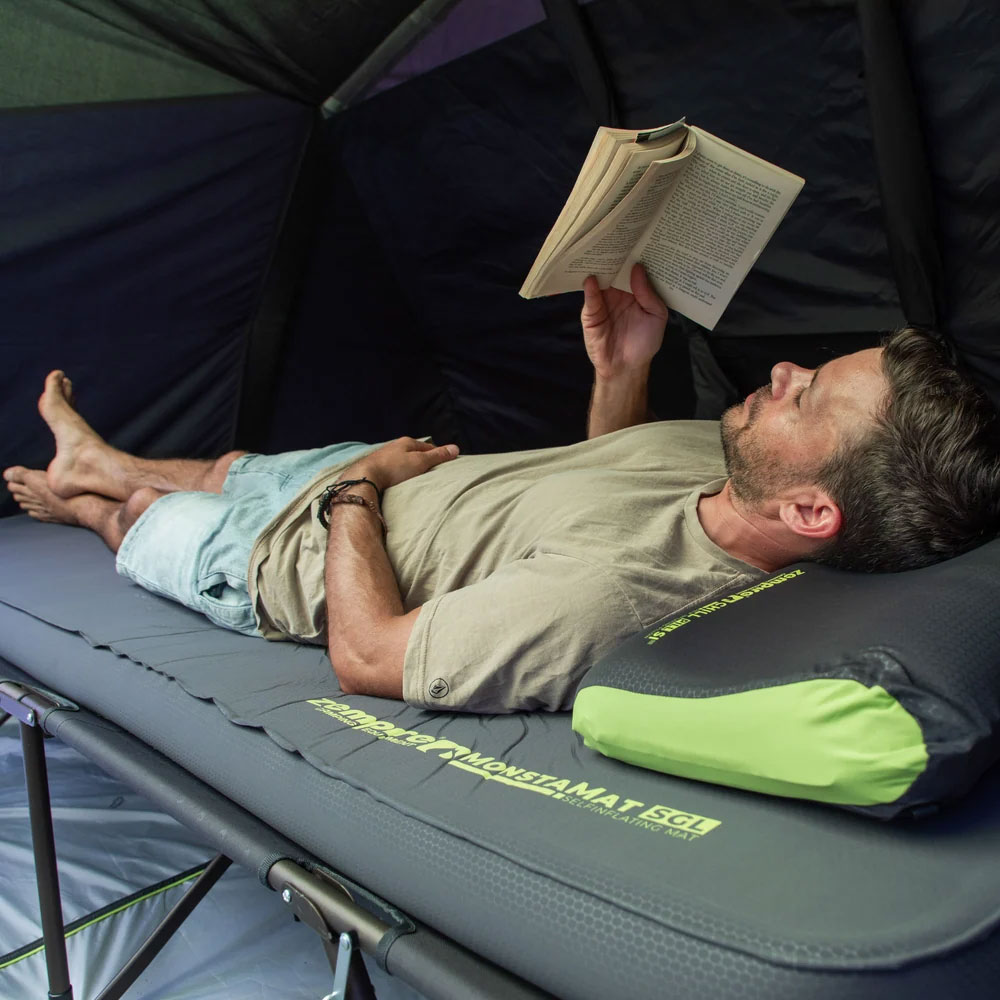
| Zempire Monstamat Single | Car camping comfort | 198 x 68 cm | 10 cm | 3.5 kg / 73 x 19 x 19 cm | 10.5 (stated; test not named) | Self-inflating, 360 valve | Thick, soft stretch top | Heavy and bulky to carry |
| Zempire Monstamat Twin | Couples sharing | 201 x 132 cm | 10 cm | 7.0 kg / 70 x 30 x 30 cm | 10.5 (stated; test not named) | Self-inflating, 360 valve | One bed, no gap in the middle | Heavy, and you feel your partner move |
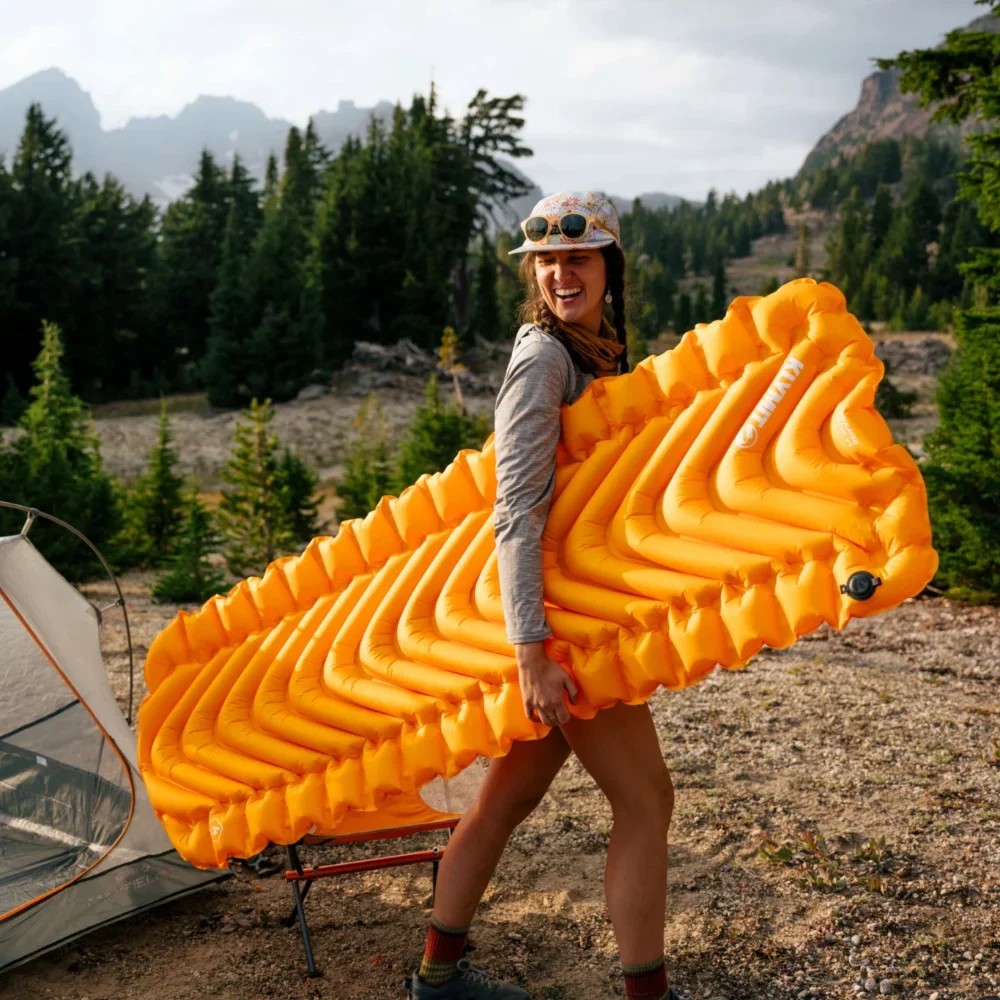
| Klymit Insulated Static V2 | Walk-in sites, small cars, tramping | 183 x 58 cm | 6 cm | 624 g / 19 x 14 cm | 4.2 (ASTM F3340-18) | Inflatable, by mouth | Tiny pack size, tested insulation | Narrower and thinner than car mats |
| OZtrail 3D Fatmat 750 | Side sleepers, max comfort | 198 x 76 cm | 15 cm | 4.4 kg / 76 x 30 x 22 cm | Not published | Self-inflating, twist valve | Deepest cushioning in the range | Biggest pack, no R-value listed |
Specs are from each product page, October 2026. Click through for today's price and stock.
Comfort and warmth are two different things
Here's the one that catches heaps of people out. A thick, squishy mat feels like a winner in the shop. Then 3am rolls around and the cold's creeping up through the floor. That's because thickness is about comfort, and warmth is a whole different job.
That job is measured by R-value: how well a mat stops the cold ground pinching your body heat. Higher means more insulation. The fairest comparison is a mat tested to ASTM F3340, a standard lab test many brands use. Only one mat in our table, the Klymit, says so. The others list a figure without naming the test, so treat those as the maker's own number. The foam mat and the Fatmat don't publish one at all, and we're not about to make one up. So no, a 15 cm mat isn't automatically warmer than a 6 cm one.
Your mat and your sleeping bag are a tag team. When you lie down, you squash the bag's filling flat underneath you, so down there the mat's doing most of the heavy lifting. Our sleeping bag guide covers the bag side of the deal.
Geoff's tip: That big old airbed in the garage? Feels great at 9pm, freezing by 3am. Air with no insulation inside just carts your warmth away. If it's all you've got, chuck a foam mat on top.
Side sleepers need more cushioning
You know the side sleeper in your family. They're the one doing the 2am shuffle, hunting for a spot where their hip isn't on the ground. Sleeping on your side puts all your weight through your hip and shoulder, and a thin mat just can't keep up. Look for 10 cm or more, like the Monstamats or the Fatmat. Self-inflating mats let you fine-tune the feel too: let a bit of air out for softer, add a few breaths for firmer.
Back sleepers have it easier. Most are sweet as on 7 cm.
Whoever's sleeping on it, blow the mat up at home first and have a lie down on the lounge floor. Much better to find out there than at midnight in a paddock.
Sharing a mat: one double or two singles?
One big bed or two singles? It's the great camping debate, and there's no wrong answer.
A double means no gap down the middle and nobody sliding off their own mat at 2am. Lovely for couples, and there's room for a small kid to wriggle in on a cold night (and you know they will). The catch? When one of you rolls over, the other one knows all about it. And a double weighs more than either single, so someone's on carrying duty.
Two singles side by side give you about the same width with less wobble. They're easier to carry, and when the kids get bigger, you can split them up. If they keep drifting apart, a set of camp sheets over the top sorts that.
Whichever way you go, measure your tent floor first. The Monstamat Twin is 132 cm wide and the Fatmat 1500 is 150 cm, and that eats a fair chunk of a smaller tent.
Easy setup: foam vs self-inflating vs inflatable
Tent's up, the kids are hungry and the light's fading. Now's not the time to be wrestling a mat. Here's how each type goes:
- Foam: unroll it, done. No valves, no leaks, nothing for the kids to pop. The toughest option going, but also the firmest.
- Self-inflating: open the valve and the foam inside draws air in on its own. Give it a few minutes, then top it up with a breath or two. Packing up takes a bit of knee work to squeeze the air out, but it's the comfy family middle ground.
- Inflatable: blow it up by mouth or with a pump sack (sold separately). It's the lightest and smallest by a country mile, but a sharp stick can puncture it, so pack the repair kit.
Geoff's tip: Unroll the self-inflating mats as soon as the tent's up and open the valves. By the time the sausages are done, the mats have done most of the work for you.
Car camping vs carrying your gear
Parked right next to the tent? Lucky you. Weight barely matters, so go for comfort: a self-inflating mat at 7 to 10 cm, or the Fatmat if someone in your crew is hard to please. You'll just need room in the boot. Four Monstamats means four 73 x 19 x 19 cm bundles, so play a quick round of boot Tetris before you check out.
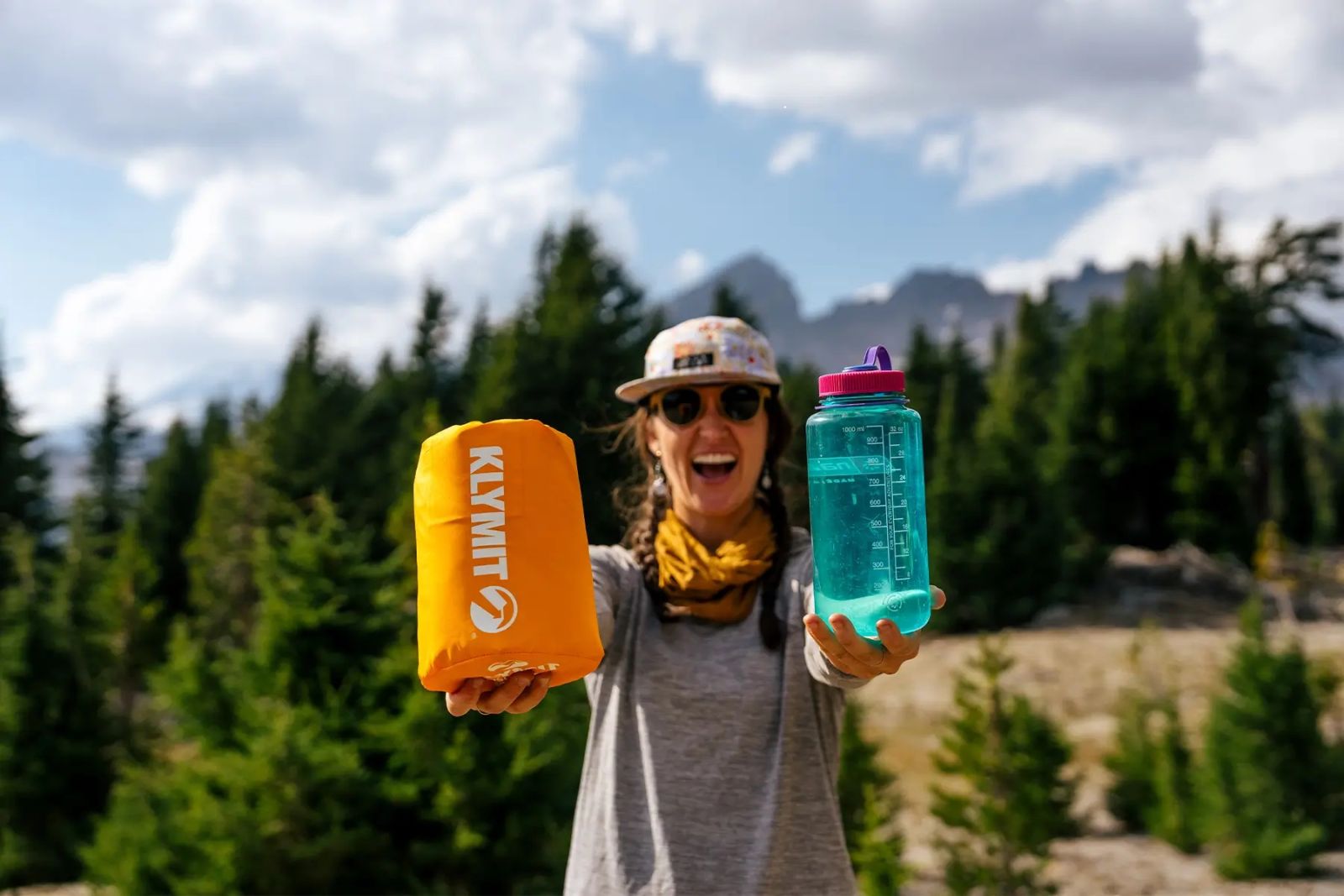
Walking into a DOC campsite, catching a ferry or squeezing into a hatchback? Then every kilo and every centimetre counts. The Klymit packs down to 19 x 14 cm at just 624 g, with a tested R-value of 4.2. That's a lot less to lug than a 3.5 kg Monstamat. The trade-off is less cushioning, so side sleepers should give it a test run at home first.
Our six picks in detail
Five of these six are among our best-selling sleeping mats, so heaps of Kiwi families are already sleeping on them. The sixth, the Weekender, is our pick for kitting out the whole crew on a budget.
OZtrail Foam Camp Mat 50 mm
Great for: the kids, the spare bed and topping a camp stretcher. It's 5 cm of high-density foam with a soft polyester top and a water-resistant, wipe-clean base. Nothing to pump, nothing to pop, and the kids can bounce on it all they like. Bonus: it also fits a Coleman Big Sky Regular bed as a replacement mattress.
Worth knowing: it's firmer than the 10 cm self-inflating mats, and it rolls up with a strap rather than squishing into a little bag. No R-value is published.
Kiwi Camping Weekender Single Mat
Great for: kitting out the whole crew without blowing the budget. It self-inflates to 7 cm, it's a generous 76 cm wide, and the non-slip base keeps it put on the tent floor instead of wandering off in the night. Repair kit included.
Worth knowing: it's thinner than the 10 cm mats, so side sleepers might want more. The R-value of 8.6 is the brand's own figure, with no test standard named.
Zempire Monstamat Single
Great for: the best night's sleep beside the car. It's our best-selling sleeping mat, and one lie down tells you why: 10 cm of cored foam under a soft stretch top, plus one 360 valve that does both inflating and deflating.
Worth knowing: 3.5 kg and 73 cm long when packed, so it's a car-camping mat, not a tramping one. The R-value of 10.5 is listed without a test standard. Tall, or like room to sprawl? The Monstamat King Single is the same mat at 76 cm wide (4.1 kg).
Zempire Monstamat Twin
Great for: couples who'd rather share (and the kid who'll end up in the middle anyway). All the Monstamat comfort at double width (201 x 132 cm), so there's no gap down the middle to fall into.
Worth knowing: 7 kg and a 70 x 30 x 30 cm bundle, and yes, you'll feel each other roll over. The R-value of 10.5 is listed without a test standard. Want even more cushioning? The OZtrail 3D Fatmat 1500 is 15 cm deep and 150 cm wide, but it weighs 8.5 kg and publishes no R-value. Check either fits your tent floor before you buy.
Klymit Insulated Static V2
Great for: walk-in campsites, small cars and the family tramper. It's light enough that nobody argues over who carries it: just 624 g, packing down to 19 x 14 cm, with a tested R-value of 4.2 (ASTM F3340-18). V-shaped chambers and side rails help keep you in the middle of the mat, not rolling off it.
Worth knowing: 58 cm wide and 6 cm deep, so it's narrower and thinner than the car-camping mats. You'll be blowing it up by mouth unless you add a pump sack.
OZtrail 3D Fatmat 750
Great for: side sleepers, sore backs and anyone who misses their own bed. A whopping 15 cm of memory foam and air, 76 cm wide, and it fits most single and jumbo swags and stretchers. The twist valve inflates and deflates in a hurry.
Worth knowing: 4.4 kg and a 76 x 30 x 22 cm pack, so it needs boot space. No R-value is published, so don't take the thickness as a sign of warmth.
Frequently asked questions
What's the best type of sleeping mat for family camping?
For car camping, a self-inflating mat 7 to 10 cm thick keeps most families happy: comfy, insulated and easy to set up. If you'll be lugging your gear any distance, a lightweight inflatable makes more sense.
What R-value do I need for summer camping in New Zealand?
It depends where you camp and how cold you sleep. Don't let the word "summer" fool you: nights by the coast, up in the hills or down in the South Island can get properly nippy. Compare mats with tested ASTM F3340 R-values where you can, and go higher if you feel the cold.
Will a double sleeping mat fit our family tent?
Check the mat's full width against the usable tent floor, not the number on the tent bag. Leave room for the other sleepers and your gear. If space is tight, two singles are easier to shuffle around.
Can kids use an adult sleeping mat?
Yep. A full-length adult mat works fine for kids, and they'll grow into it. For the little ones, a foam mat is cheap, tough and bounce-proof.
Can you fix a punctured sleeping mat?
Usually, yes. Most inflatable and self-inflating mats come with a repair kit. Find the hole by listening for the hiss or with soapy water, let it dry, then patch it. Pack the kit every trip, just in case.
Keep planning
- Choosing sleeping bags too? Read how to choose a sleeping bag for NZ camping.
- Got a question? Give the team a call or pop into the Hamilton store. We love a good gear yarn. See you out there!
Written by Geoff Rawlings
Geoff founded EquipOutdoors in Hamilton in 2003 and has spent more than two decades helping Kiwis choose camping and outdoor gear. He personally vets the products EquipOutdoors ranges.


