



How to choose a sleeping bag for New Zealand camping

Sleeping Bag Guide · New Zealand
Compare comfort ratings, down and synthetic fill, shapes and sizes for your next trip.
By Geoff Rawlings | Last updated: September 2026 | 7 min read
Choose your sleeping bag around the coldest temperature you reasonably expect, then check the comfort rating, insulation, fit and weight. For most people, the comfort rating is a better starting point than the lower limit. Pair it with the right sleeping mat too.
Start with where and when you will use it
There is no one sleeping bag for every Kiwi adventure. A roomy bag for a powered campsite in January has a very different job from one you have to carry into a backcountry hut in autumn.
Ask where you will sleep, the lowest temperature you may face, whether you will carry the bag and whether you normally sleep warm or cold.
Check a recent forecast, then leave some margin for exposed or higher locations. New Zealand weather has a habit of keeping campers humble. The Department of Conservation recommends a 3 to 4 season sleeping bag for DOC campsites and overnight or multi-day tramps. DOC also tells trampers to expect wet conditions and carry dry clothes for sleeping.
If you only camp beside the car in warm weather, comfort and room may matter more than packed size. For tramping, every gram and litre has to fit in your pack, so a mummy-shaped down bag can make more sense.
Comfort rating versus limit rating
Temperature labels can be a bit sneaky. A bag with "-6°C" in its name may not promise a comfortable night at -6°C. Check the small print before you chuck it in the cart.
Comfort rating is the better starting point for a person who sleeps cold or wants a cautious choice. Limit rating is a lower benchmark. It should not be treated as a comfort promise. Extreme rating is a survival threshold, not a temperature to plan a normal night around.
Clothing, fatigue, dampness and the sleeping mat all affect warmth. If you sleep cold, leave extra margin rather than aiming exactly at the forecast minimum.
What ISO or EN testing tells you
ISO 23537-1 sets out a standard method for assessing adult recreational sleeping bags under controlled, steady-state conditions.
Tested ratings are useful for comparing bags, but they are not a personal guarantee. The standard does not apply to children's or babies' bags, military bags or extreme expeditions. Compare comfort figures first.
If a bag only lists a single "minimum" or brand temperature, read it more cautiously. Check whether the maker identifies that figure as comfort, limit or something else.
Down versus synthetic insulation
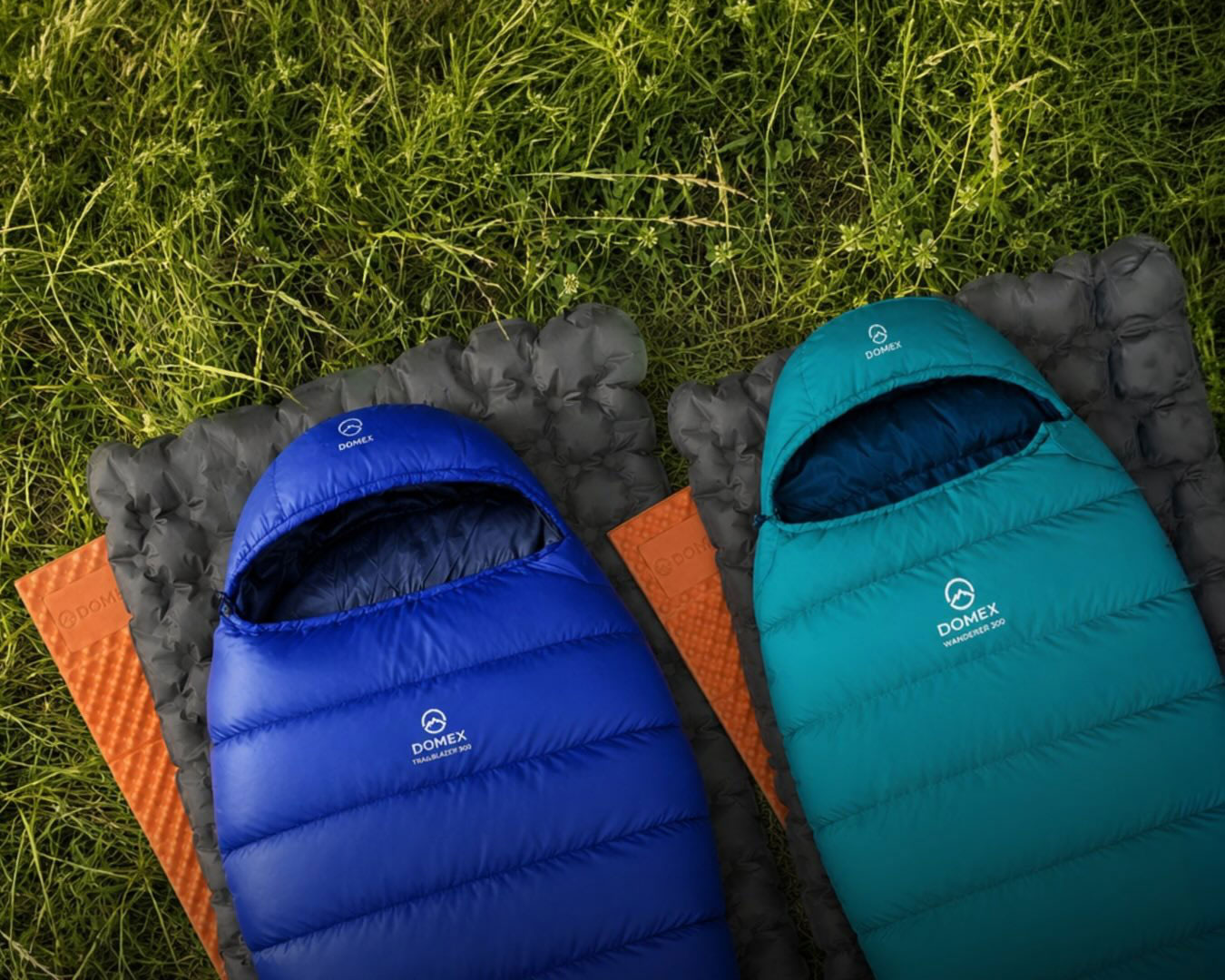
Choose down when weight and pack size matter
Down usually provides more warmth for its weight and compresses into a smaller space. It suits trampers who need to keep pack weight down. Higher fill power indicates down that can loft more efficiently, although construction and fill weight still matter.
Choose synthetic when damp-weather resilience and value matter
Synthetic fill tends to be bulkier and heavier for similar warmth, but it is often less expensive and more forgiving around condensation, wet tents and family use. It is a practical choice when you travel by car or expect the bag to have a harder life.
There is no winner for every trip. A compact down bag can earn its keep on regular tramps. A roomy synthetic bag may be the smarter buy for weekends at the campsite.
Fit, user height and sleeping-bag shape
A bag should let you lie naturally without leaving a large empty space that your body must warm.
Mummy bags taper around the legs to reduce weight and unused space, but can feel restrictive. Rectangular bags provide more room at the cost of extra bulk. Double bags and fitted comforters suit couples at campgrounds, not tramping.
Check the internal length and shoulder width, not only "standard" or "XL" in the name. If you are tall, an XT or XL model can stop your feet compressing the insulation. If you are between sizes, balance the extra room against the additional weight and air space.
Pack size and weight
If the car is doing the carrying, a 3 kg bag is no drama. Put it in a tramping pack and you will notice every gram. Check weight and packed dimensions, store the bag loosely between trips and do not sacrifice the warmth you need just to save a few hundred grams.
Why the sleeping mat and its R-value matter
Your body squashes the insulation beneath you, so it cannot trap as much warm air. Your mat does much of the work between you and the cold ground. A warm bag with the wrong mat is only half a sleep system.
R-value measures resistance to heat flow. A higher R-value means more insulation. ASTM F3340 provides a repeatable test for comparing the thermal resistance of camping mattresses, although the standard notes that real-world results can vary with factors such as posture, compression and uncovered areas.
Choose the bag and mat as one sleep system. A warm bag on an uninsulated airbed can still feel cold. For cool or uncertain conditions, check that the mat has a stated, tested R-value rather than judging it by thickness alone.
Recommended sleeping bags for common NZ trips
These six options cover warm-weather travel, family camping and lightweight tramping.
| Product | Best suited to | Temperature information | Fill and shape | Weight and pack size | Main strength | Main trade-off |
|---|---|---|---|---|---|---|
| Roman Palm Lite +15°C | Warm summer travel | +15°C brand rating | Synthetic, semi-tapered | 700 g | Compact and light for warm trips | Not suitable for cold nights or general three-season tramping |
| OZtrail Kingsford -3°C | Affordable family and car camping | -3°C listed rating; not identified as comfort or limit | Synthetic, roomy rectangular bag with hood; 100 × 215cm | 2.7kg; 26cm diameter × 44cm long | Room to move and cold machine washable at a family-camping price | Heavy for tramping; comfort rating not confirmed |
| Coleman Mudgee Double C-3 | Couples camping in cool weather | -3°C comfort | Synthetic double bag | 4.4 kg; 56 × 34 × 33 cm | Shared warmth and room for two adults | Large and heavy to transport |
| Domex Black Ice XL | Cold, damp-prone car camping | Stated comfort zone of -8°C to -3°C | Synthetic, semi-rectangular XL | 2.3 kg; 14.9 L | Roomy synthetic option for cold campsites | No three-number ISO result shown on its page |
| Domex Wanderer 300 | Lightweight summer and shoulder-season tramping | 4.6°C comfort, -0.5°C limit | RDS-certified down, mummy | 740 g; Ø28 × 15 cm | Low weight and small packed size | Not for winter or cold sleepers |
| Domex Versalite -6°C | Colder three-season tramping | 0°C comfort, -5.9°C limit | 650+ loft hydrophobic down, mummy | 850 g | More warmth without campsite-bag weight | Snug cut and not a severe-winter bag |
Frequently asked questions
What sleeping bag temperature rating should I choose for New Zealand?
Work from the coldest overnight temperature you reasonably expect and use the comfort rating as your main comparison. Leave extra margin if you sleep cold, camp at altitude or expect changing conditions.
Is a 0°C sleeping bag warm enough?
Check what "0°C" means. One bag may have a 0°C comfort rating while another uses 0°C as its lower limit. Your mat, clothing, shelter and personal cold tolerance also affect the result.
Is down or synthetic better in New Zealand?
Down is usually lighter and smaller for tramping. Synthetic fill is often more affordable and easier to manage around damp family-camping conditions. Keep either type dry and choose according to the trip rather than the country alone.
Can I use a camping sleeping bag for tramping?
You can if the rating, weight and packed size fit the route. Roomy campsite bags are often too heavy and bulky to carry comfortably for several days.
Does a warmer sleeping bag make up for a poor sleeping mat?
Not reliably. The insulation under your body compresses, so a mat with a suitable R-value is part of the sleep system. Check both before a cold trip.
Choose the whole sleep system
Start with the likely temperature, compare comfort ratings and decide how much weight and space you can carry. Add an insulated mat and dry sleep clothing, then you are good to get out there.


