


Family camping checklist: your first summer trip in New Zealand

Family Camping Guide · New Zealand
Happy campers start here. What to buy, what to raid from the kitchen and what can wait until trip two.
By Geoff Rawlings, founder of EquipOutdoors | Last updated: 22 October 2026 | 5 min read
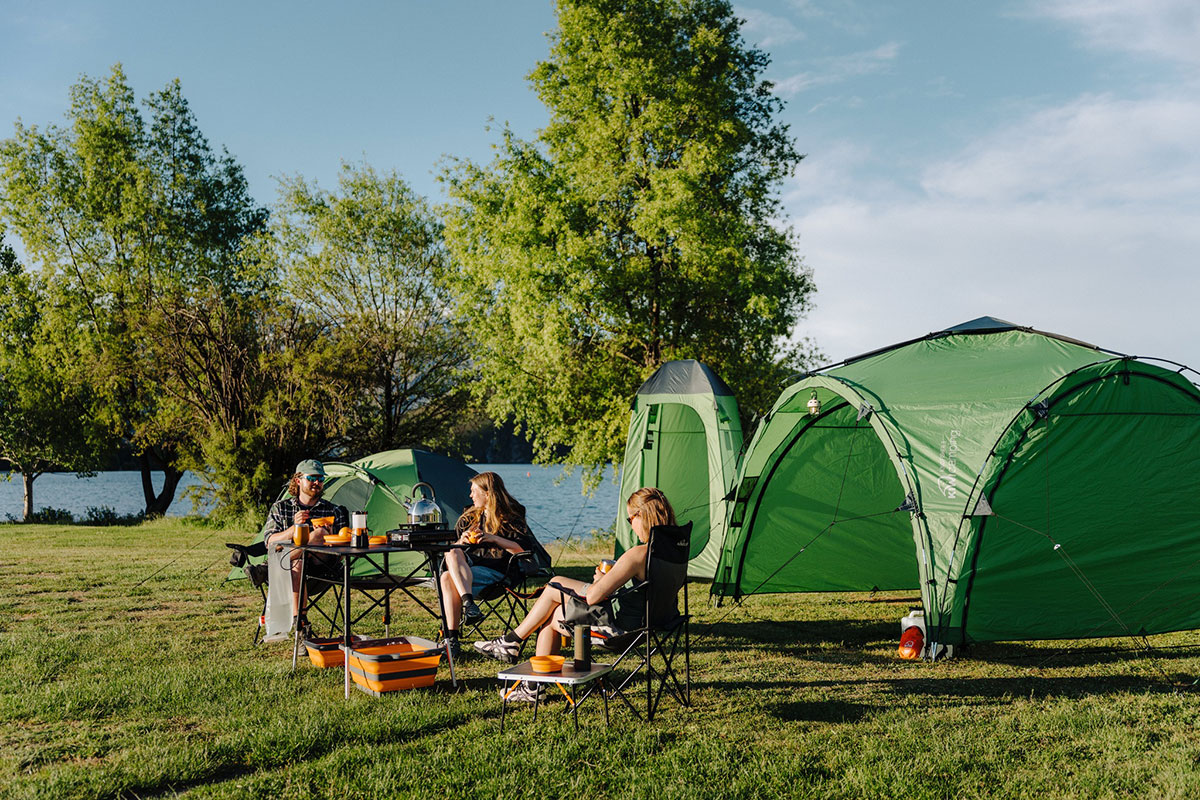
First family camping trip this summer? Good on ya. Here's the short version: spend your money on a good night's sleep and somewhere to sit. That means a family tent you've practised pitching at home, a sleeping mat and sleeping bag for everyone, and a camp chair each. Add a simple way to cook, a headlamp per person and a first aid kit. If the car's coming too, raid the kitchen for the rest (pots, pans, plates, pillows). No need to buy the whole shop for trip one.
Download the free family camping checklist
Our free printable checklist covers everything to sort before you go and everything to pack, with tick boxes. The marks what's probably already in your house. Print it, stick it on the fridge and tick it off on the lawn. Much easier than finding the gaps at the campsite.
What to buy first, what to grab from home
| Buy first | Grab from home | Upgrade later | |
|---|---|---|---|
| Shelter | Family tent with room for beds and bags, spare pegs, mallet | Tarp or old ground sheet | Gazebo or shade shelter, tent carpet |
| Sleep | Sleeping mat and sleeping bag for each person | Pillows | Stretchers, bigger mats |
| Seating | A camp chair for each person | Picnic blanket | Camp table |
| Cooking | Stove and gas (unless the site has a cooker you can use), chilly bin | Pots, pans, plates, cutlery, chopping board | Camp kitchen bench, bigger stov |
| Lighting | Headlamp for each person | Torches, spare batteries | Rechargeable lantern |
| Safety | First aid kit, sunscreen, insect and sandfly repellent | Personal medication | Power bank |
| Powered sites only | Camping power cord with RCD | Phone chargers | Fan, small fridge |
1. Buy first: tent, beds and a chair each
Here's the thing about family camping: night one decides whether there's a trip two. Cold, cramped or grumpy kids make for a long night (and an even longer drive home). So this is where your money should go first.
A family tent with room to spare
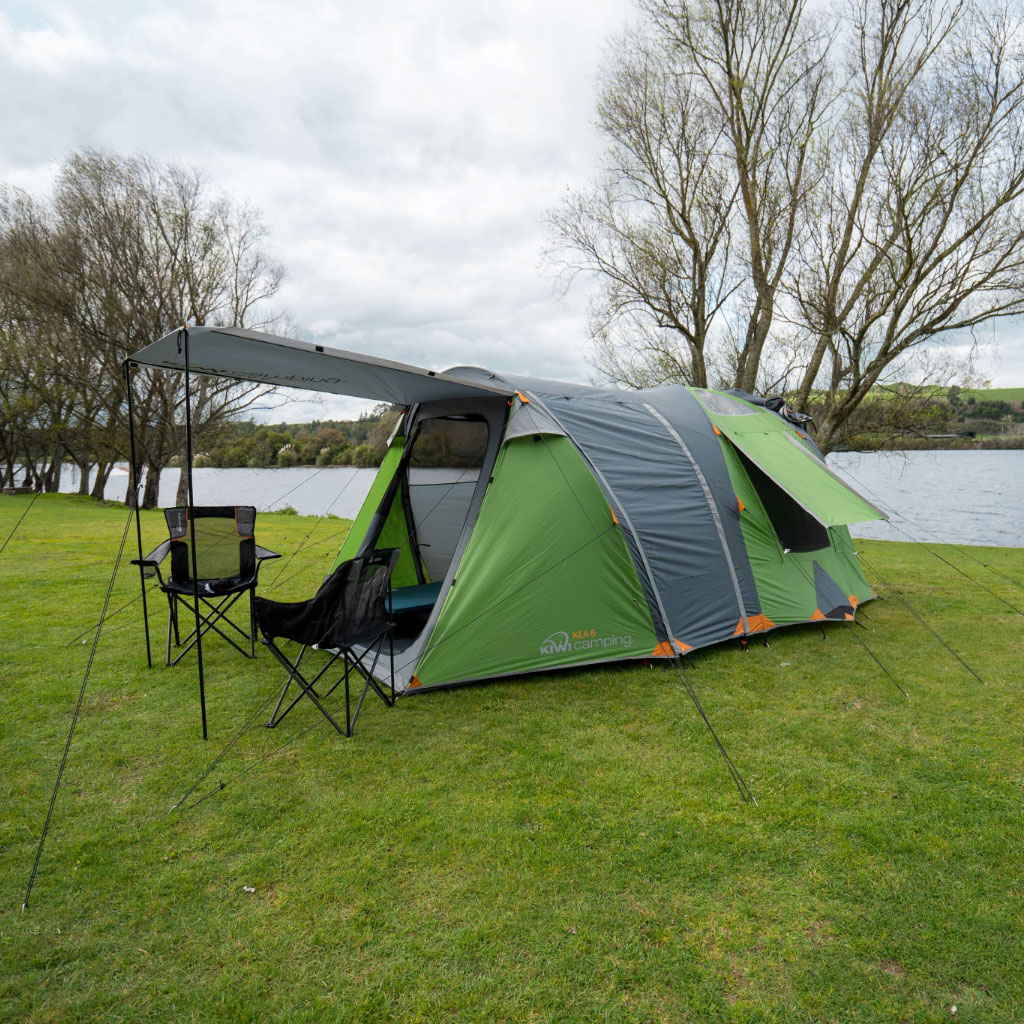
The number on the tent bag is how many people fit lying down like sardines. It doesn't count beds, bags or a rainy afternoon of cards. For a family of four, a six-person tent is a good place to start. Then check the floor plan against the mats or beds you'll actually use.
Pitch it on the back lawn before you go. Working out which pole goes where is a lot more fun at home with a cuppa than at 6pm with hungry kids watching. Our family tent guide compares six options side by side.
Geoff's tip: Get the kids to help with the practice pitch. They'll know the drill at the campsite, and you'll have extra hands for the pegs.
A sleeping mat and sleeping bag for everyone
The mat matters just as much as the bag. When you lie down you squash the bag's insulation flat, so the mat is what keeps the cold ground from stealing your warmth. That's why an airbed with no insulation can still leave you chilly at 3am.
And yes, Kiwi summer nights can get properly cold, especially by the coast, up in the hills or down in the South Island. Pick a bag by its comfort rating, not the number in its name, and leave some wiggle room for anyone who feels the cold. Our sleeping bag guide explains the ratings.
A camp chair for each person
Don't count on a picnic table. DOC says tables at its standard campsites "may be provided", and they vary from site to site. A holiday park might have a few, but they're often snapped up before you've finished pitching. A whole weekend of sitting on the ground gets old fast (ask anyone's knees), so give everyone their own chair. Trust us, it's the best seat in the house.
2. Use what you've got: raid the kitchen cupboard
If you're camping next to the car, you don't need a dedicated camp kitchen for trip one. Grab the pots, pans, plates, cutlery and chopping board from home. Throw in the pillows off the beds and a picnic blanket for the kids.
Clothes work the same way. Most families already have what they need: warm layers for the evening, a rain jacket each, sun hats and jandals. Just fill the gaps.
The two things the kitchen can't cover are a cooler (aka the chilly bin) for food and drinks, and a way to cook, unless your site has a cooker you can use. More on that below.
3. Upgrade later: once you're hooked
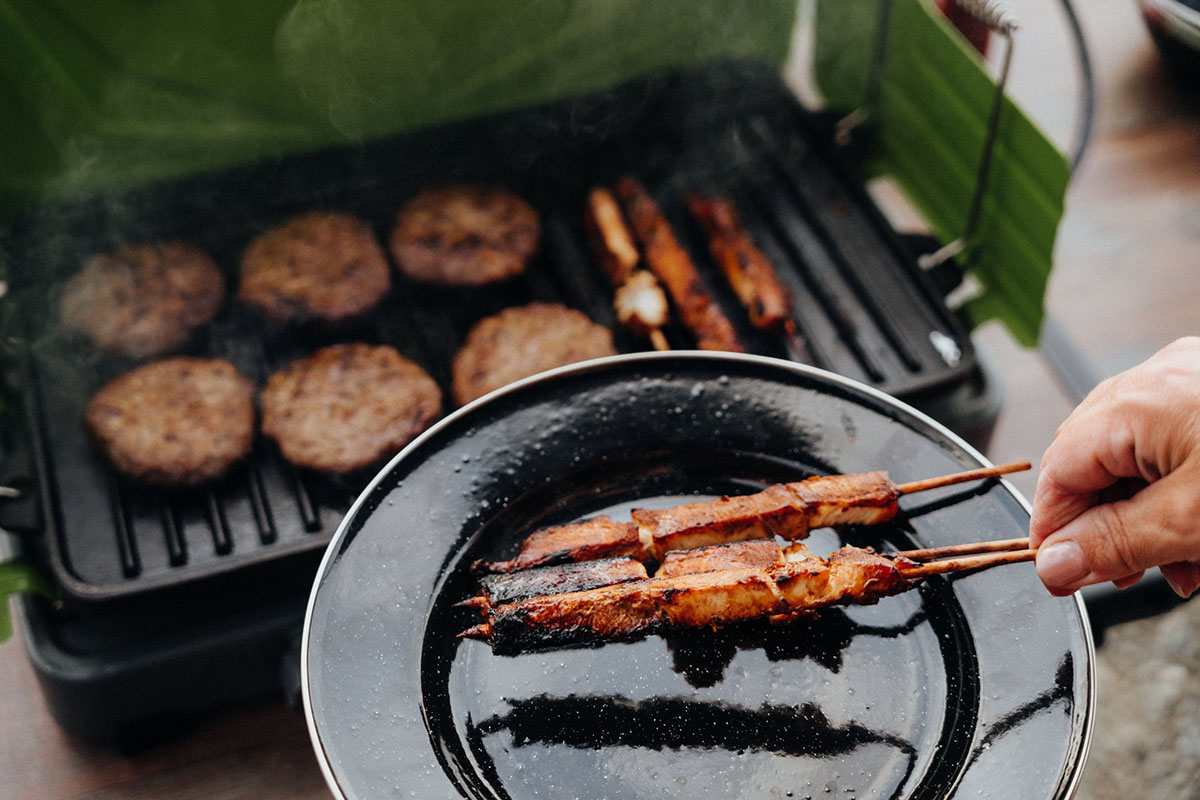
There's heaps of gear that makes camping comfier, but none of it is a must for the first trip. See how your family likes to camp first, then upgrade:
- Shade: a gazebo or shade shelter for long, hot days at the same spot
- Sleep: stretchers or thicker mats if anyone woke up sore
- Kitchen: a camp kitchen bench and a bigger stove if you love a camp cook-up
- Light: a rechargeable lantern for the table at night
- Floor: tent carpet. Lovely to have, but the kids will sleep just as soundly without it
Geoff's tip: Write your upgrade list on the drive home, while it's fresh. What did you wish you had? What never left the car? That's your shopping list sorted.
4. Holiday parks, powered sites and shared facilities
Most first family trips are a night or two at a holiday park or a serviced campsite. What's on site changes what you need to pack, so check before you load the car.
If the site has power
A powered site means you can charge phones and lights, and run a small fan or fridge. Ask the park what connection it has, then bring an approved outdoor camping lead with RCD protection (a built-in safety switch). Check the site's load limit before you plug in a fridge or anything else big. Nobody wants to be the family that tripped the whole row.
If the site has a shared kitchen
DOC's serviced campsites have a kitchen or cooking bench, hot showers, flush toilets and rubbish collection, and holiday parks usually offer much the same. If the site confirms there's a cooker you can use, you may be able to leave the stove at home for trip one. Still bring your own cookware and a cooler, though. Shared kitchens get busy at dinner time.
If the site is basic
Basic and standard campsites are a lot more back-to-nature. DOC says basic campsites need you to be "fully self-sufficient", and the water may be untreated and need boiling. Bring your own stove, enough water, rubbish bags and something to sit on (see, told you about the chairs). Facilities vary from site to site, so check the exact campsite's page before you go.
5. Camping in a Kiwi summer
Sun, heat and chilly nights
Summer days here are bright and hot. Pack sunscreen, hats and some shade for the middle of the day. A tent with a darkened or blockout fly stays cooler and keeps the kids asleep past sunrise (you're welcome). Then expect the night to be cooler than the day suggests, and pack warm layers for everyone.
Wind and rain
It's New Zealand. Four seasons in one day is part of the charm, even in mid-summer. Peg the tent down properly, use the guy ropes and pick a sheltered, well-drained spot. Check the forecast again the day before you head off.
Fire bans and campfires
Summer is fire season. On public conservation land, DOC says you can only light a campfire in a designated fireplace, and only when there's no fire ban. Fire and Emergency New Zealand sets the fire season and local rules (some areas need a permit), and you can check yours at checkitsalright.nz. At a holiday park, follow the park's rules too. DOC says gas burners and enclosed liquid-fuel stoves can usually be used for cooking on public conservation land at any time. Never use a gas stove inside a tent or vehicle.
6. Family camping gear we recommend
Our picks to get the whole whānau sorted for trip one. Most are among the most popular gear Kiwi families buy from us, and they're all in stock now, so click through for today's price.
Kiwi Camping Kea 6
Great for: a family of four doing weekends and holiday parks. You get two rooms: a bedroom (2.1 x 2.45 m) and a living area the same size again, so wet days have somewhere to go. Four doors, a 5,000 mm waterhead, a power cord entry and a 3-year warranty.
Worth knowing: it's a classic poled tent (colour-coded, but not instant), so do that practice pitch at home. It weighs 15 kg.
Upgrade pick: OZtrail Fast Frame BlockOut Lumos 10P
Got more budget, or want a room to yourself? You can't go past the Lumos 10P. Three rooms (one for the kids, one for the gear, one for you), a 3,000 mm waterhead, a BlockOut fly that blocks up to 95% of light, and a dimmable light built into each room. Bedtime stories, sorted.
Worth knowing: it weighs 36.9 kg, so it's a car-camping tent, and you'll want a second pair of hands to carry it.
OZtrail Kingsford -3°C Sleeping Bag
Great for: grown-ups who like room to move. It's an oversized 100 x 215 cm rectangle with a contoured hood and a draft tube along the zip, and it goes straight in the washing machine (cold wash) after the trip.
For the kids: the Kingsford Junior is the same bag at 170 cm long and 1.7 kg.
Worth knowing: the -3°C is the listed temperature rating, not a comfort rating, so pack a warm layer to sleep in on cold nights. At 2.7 kg it's one for the car boot, not the tramping pack.
Zempire Monstamat Single
Great for: the best night's sleep in the tent. It self-inflates to a thick 10 cm, with an R-value of 10.5 to keep the cold ground at bay.
Worth knowing: it's 68 cm wide and weighs 3.5 kg, so three fit side by side in the Kea 6 bedroom. Comfy, but not small.
OZtrail Classic Arm Chair
Great for: kitting out the whole family without blowing the budget. Steel frame, a drink holder (priorities) and a 110 kg rating, all at 2.8 kg.
Worth knowing: the fabric is single-layer with no padding. If someone plans to lounge all evening, check out the Kiwi Camping Lush Chair.
Companion High Output 2 Burner Deluxe Stove
Great for: cooking the whole family feed at once. Two burners, built-in windshields and room for two large pots.
Worth knowing: it weighs 5 kg, is for outdoor use only and needs a sturdy table.
Coleman Daintree 38 Litre Wheeled Cooler
Great for: a family weekend's food and drinks, wheeled from the car to the site. No lugging required. The drain means no tipping it over to empty the water, either.
Worth knowing: it has 3 cm of insulation, so on longer stays plan a top-up ice run.
OZtrail Lumos FP200 Rechargeable Headlamp
Great for: one per adult, for midnight loo runs and cooking after dark. Up to 200 lumens, a red mode that won't blind the rest of the tent, and a motion sensor for when your hands are covered in sausage. It's rechargeable, and runs on 3 AAA batteries if the charge runs out.
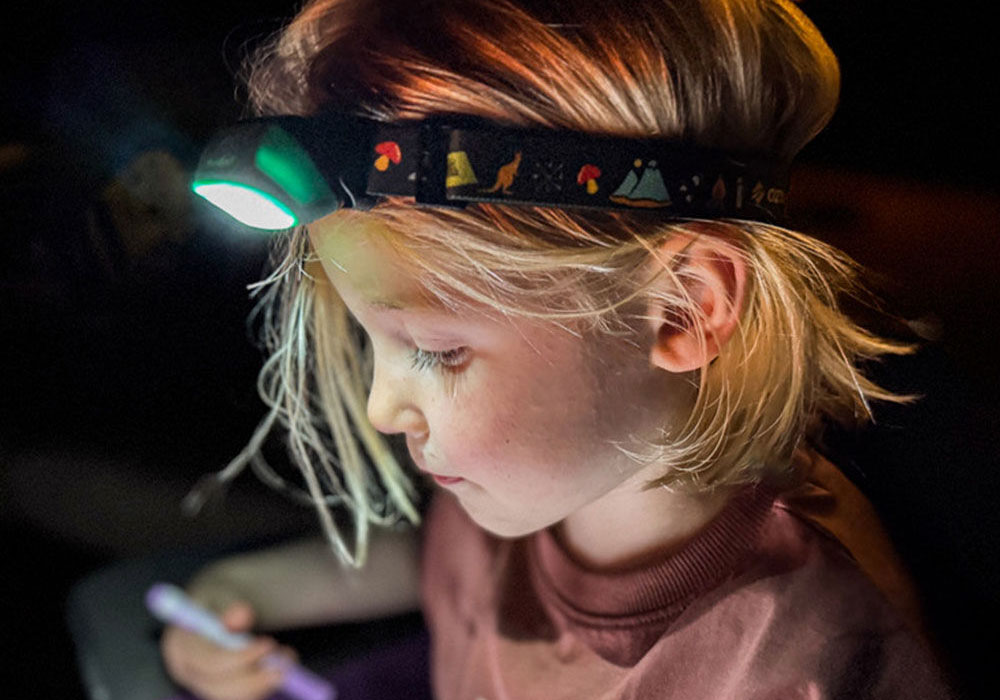
For the kids: the Lumos Twinkle 80L Kids Headlamp has one simple button, is IPX4 water resistant and runs up to 14.5 hours on low.
Worth knowing: the FP200 lasts about 5.5 hours on max, so use the lower modes around camp and charge it before you leave.
Kiwi Camping 15m RCD Power Cord with Camping Plug
Great for: families booking powered sites. It has the round-pin campsite plug and a built-in RCD safety switch.
Worth knowing: it's for powered sites only, and the socket has a 10 A maximum load.
Frequently asked questions
What do I need for a first family camping trip in New Zealand?
A tent with room for everyone's beds, a sleeping mat and sleeping bag for each person, camp chairs, a way to cook, a cooler, headlamps and a first aid kit. If you're car camping, bring kitchen gear and pillows from home.
What size tent does a family of four need?
A six-person tent is a good starting point. Check the floor plan against your actual mats or beds, because the number on the bag is a maximum, not a comfortable fit with gear.
What should I pack for a family camping trip besides gear?
Food, drinking water if the site's supply is uncertain, toiletries, towels, toilet paper, rubbish bags and the kids' usual medication. Check your campsite's facilities before you pack.
Do kids need their own sleeping bag?
Yes. Each child needs their own bag and mat, because sharing makes it hard for anyone to stay warm. Kids' bags aren't covered by the adult ISO temperature test, so leave extra margin for cold nights.
Do I need camp chairs if the campsite has picnic tables?
Yes. Tables vary from site to site and aren't guaranteed, and at busy holiday parks they're often taken. A chair each means nobody spends the weekend on the ground.
Is a powered site worth it for families?
It's handy if you want to charge devices, run a fan or keep a small fridge going, and powered sites are often close to the park's facilities. You'll need a camping power cord with an RCD. If you're happy with rechargeable lights and a cooler, an unpowered site works fine.
Can you have a campfire at a holiday park in summer?
Only if the park allows it and the local fire rules permit it. Check checkitsalright.nz and the park's rules before you light one.
What can I skip buying for the first trip?
Most of the kitchen, tent carpet, a gazebo and a camp table. Borrow them or bring them from home, then upgrade once you know you'll go again.
Keep planning
- New to camping full stop? Start with the camping checklist for beginners.
- Choosing a tent? Read how to choose a family tent for NZ conditions.
- Choosing sleeping bags? Read how to choose a sleeping bag for NZ camping.
- Choosing a stove? Read how to choose a camping stove for NZ trips.
Got a question we haven't answered? Give the team a call or pop into the Hamilton store. We love a good gear yarn. See you out there!
Sources and further reading
- Department of Conservation: Lighting fires on public conservation land. https://www.doc.govt.nz/parks-and-recreation/know-before-you-go/fires/ (accessed October 2026)
- Department of Conservation: Campsite categories, facilities and fees. https://www.doc.govt.nz/parks-and-recreation/places-to-stay/stay-at-a-campsite/facilities-and-fees/ (accessed October 2026)
- Fire and Emergency New Zealand: Check it's alright. https://www.checkitsalright.nz/ (accessed October 2026)
- Fire and Emergency New Zealand: Open air fire rules. https://www.fireandemergency.nz/outdoor-and-rural-fire-safety/what-are-the-fire-seasons/open-air-fire-rules/ (accessed October 2026)
- WorkSafe: Cords and leads. https://www.worksafe.govt.nz/managing-health-and-safety/consumers/safe-living-with-electricity/cords-and-leads/ (accessed October 2026)
Written by Geoff Rawlings
Geoff founded EquipOutdoors in Hamilton in 2003 and has spent more than two decades helping Kiwis choose camping and outdoor gear. He personally vets the products EquipOutdoors ranges.


